
hrimp Farming Crisis in Nayarit and Other Mexican States
Shrimp production, which for decades was one of the main economic drivers for hundreds of families in Nayarit, is now facing a severe crisis. Abandoned farms, millions of pesos in debt, unemployment, disease outbreaks, and shrimp farmers who claim they have lost their entire livelihoods due to the massive illegal entry of Ecuadorian shrimp have devastated the industry.
These challenges have been compounded by shrimp diseases, rising production costs, limited government support, and international trade triangulation schemes, ultimately causing the collapse of an activity that sustained entire coastal communities for years.
Aquaculture producer Luis Enrique Barajas Jiménez explained that the industry entered a “perfect storm” in 2019, from which many producers have never recovered.
“Today, shrimp farmers stock their ponds with fear,” he said.
He recalled that Nayarit once cultivated approximately 13,000 hectares of shrimp ponds and produced around 28,000 tons per cycle. Today, the cultivated area has declined by nearly 38 percent, and dozens of shrimp farms have been abandoned.
The economic impact has also become a social and family crisis. Many producers have lost homes, land, vehicles, and family projects built over generations due to mounting financial losses.
Barajas Jiménez explained that a single farm previously employed up to 30 workers. Today, many employ only one or two people.
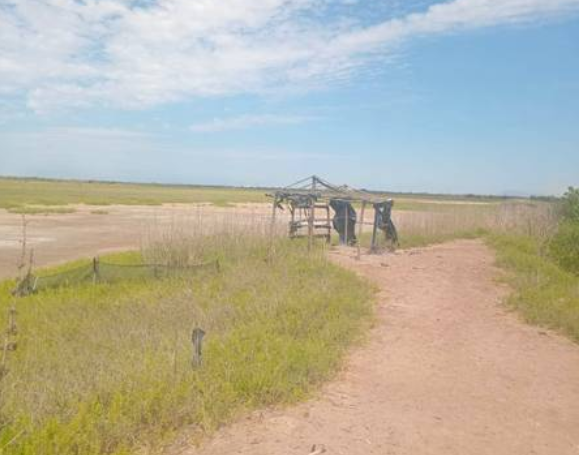
Farms that were once active with cleaning, feeding, maintenance, security, and harvesting operations now stand largely deserted.
“There is no other option. We go fishing or look for any kind of work just to survive,” he lamented.
Illegal Imports and Unfair Competition
Producers in Nayarit argue that much of the problem stems from the illegal and large-scale entry of Ecuadorian shrimp through smuggling operations and trade triangulation involving Central American countries that have trade agreements with Mexico.
“Ecuadorian shrimp is everywhere and sells for up to 20 pesos less than ours. We simply cannot compete,” they stated.
They also alleged corruption networks within customs agencies that allow the irregular entry of imported shrimp.
“There are containers registered as carrying chicken that actually contain shrimp. That passes through customs because someone allows it,” they claimed.
Production costs in Mexico have also increased significantly. Shrimp feed costs approximately 30,000 pesos per ton, while diesel fuel, electricity, larvae, chemicals, and other inputs have all become more expensive.
Unequal Conditions
According to Barajas, producers in Ecuador operate under very different conditions. They benefit from subsidies, advanced technology, and systems supported by substantial government and international investment.
“They produce more cheaply and receive more support. We are surviving on our own,” he said.
He added that diseases affecting shrimp populations have severely damaged aquaculture farms, yet many of these diseases have not been officially recognized by Mexico’s National Commission for Aquaculture and Fisheries (Conapesca). Numerous farms have suffered massive losses as a result.
Despite years of complaints and appeals, producers say they have received insufficient support from either federal or state authorities.
“The government never listened to us. They left us alone,” Barajas stated.
The financial collapse has also affected education opportunities. Many young people have been forced to abandon university studies because their families can no longer afford tuition and living expenses.
“The dreams of many young people were cut short. We can barely survive,” he emphasized.
Drowning in Debt
The aquaculture farm Los Tres Botoncaguer SPR de RL, founded in 1990 by 13 partners in Nayarit, experienced its most successful years during the 1990s and early 2000s.
“Those were wonderful years,” recalled Leonardo Meza Lizárraga.
However, beginning in 2005, the farm began feeling the effects of cheaper imported shrimp from Ecuador entering Mexico through Central American countries.
“We were ruined. The farm no longer operates,” he revealed.
The company stopped cultivating approximately 85 hectares and now faces millions of pesos in debt to feed suppliers after being unable to repay credit obligations.
“We are facing lawsuits and pressure because we could not pay. We no longer know what to do,” Meza said.
Similar situations exist across many shrimp farms in Nayarit. Some producers carry debts ranging from 12 to 15 million pesos and have been reported to credit bureaus.
“We once had excellent credit histories. Now nobody will lend us money,” Meza explained.
The losses have also devastated coastal economies that depended on shrimp farming. Transportation businesses, ice suppliers, repair shops, fuel vendors, food providers, and service companies have all suffered from declining production.
Many aquaculture producers now survive through fishing in coastal wetlands or cattle sales, while their farms—once symbols of economic development—remain empty and abandoned.
Similar Problems in Sonora and Sinaloa
In Sonora, illegally imported Ecuadorian shrimp has caused a dramatic drop in the price of Mexican shrimp, resulting in growing inventories and bankruptcy risks for small producers, according to Juan Carlos López Ibarra.
The situation mirrors what shrimp farmers in Sinaloa and Nayarit are experiencing, where warehouses are filled with unsold shrimp and many small producers are close to financial collapse.
López Ibarra explained that imported shrimp can be sold for 15 to 20 pesos less per kilogram, regardless of quality, making it more attractive to buyers and causing Mexican shrimp prices to fall.
Although Mexican shrimp is generally considered higher quality, many buyers prioritize price over quality, accelerating the displacement of domestic products.
No Immediate Solution
López Ibarra said that many producers initially believed the problem would be temporary and decided to store their shrimp rather than sell at low prices.
However, after more than two months without a solution from the federal government, producers are now under pressure to sell their inventory before the arrival of the next harvest.
In Sonora, the first harvests are expected to begin in June. While López Ibarra did not specify the exact amount of unsold inventory, he confirmed that large quantities of shrimp remain in storage, a fact also verified by commercial distributors.
He emphasized that small producers have suffered the most severe consequences.
Unlike Sinaloa and Nayarit, where many farms belong to large economic groups capable of absorbing losses, Sonora still has numerous smaller producers who are particularly vulnerable.
Nevertheless, López Ibarra warned that even medium-sized and large producers remain at risk if the smuggling of foreign shrimp into Mexico continues.
Source: jornada