Lawyers representing citizens opposed to the construction of the “Nicolás Álvarez Ortega” stadium in Tepic, Nayarit, denounced that District Judge Gabriela Hernández Anaya endorsed the illegality of the project by dismissing an injunction filed against it. The lawyers argue that the project violates the cultural and environmental rights of the people of Nayarit.
José Manuel Hermosillo, of the law firm Artículo 27, which specializes in strategic litigation related to art, culture, and cultural rights, and Luis Daniel Juárez García, a lawyer assisting with the legal strategy, stated that the judge argued the citizens lacked a legitimate interest in the case, despite the fact that the project lacks the appropriate permits and violates fundamental rights.
Hermosillo explained that the district judge dismissed the indirect amparo lawsuit 818/2025, which is being processed in the Third District Court, arguing that the plaintiffs’ homes are located between 1.9 and 7.6 kilometers from the construction site, which apparently does not demonstrate a direct impact or contiguity.
However, he said that this concerns human rights, such as access to culture, the environment, and mobility, and not property rights.
We are talking about fundamental rights such as the right of access to culture. This is a cultural site, a cultural site that had a perfectly sustainable environment with more than 200 trees, which are no longer there.
Both lawyers agreed that the judge’s analysis was “very vague, without any basis or justification whatsoever,” and that her ruling is “deceptive” and “prejudiced.”
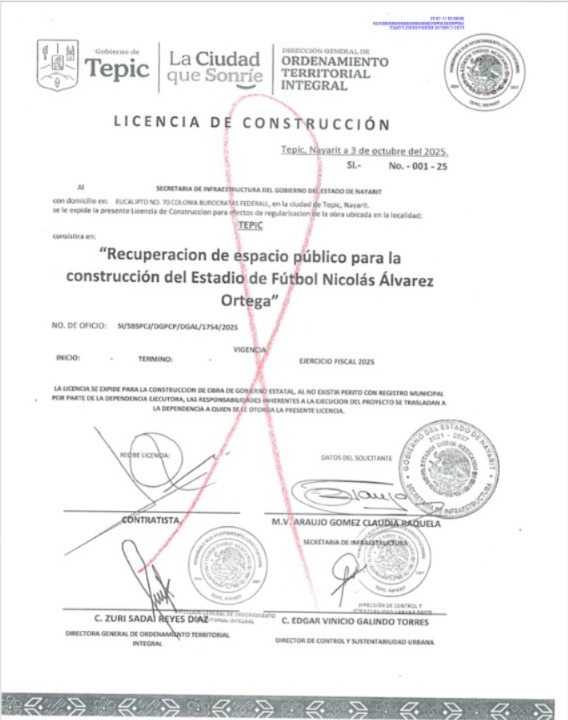
Furthermore, Juárez García explained that there have been a series of inconsistencies. For example, he said, when the definitive suspension was granted to halt construction while the injunction was being resolved, the judge confirmed that there was no building permit, urban compatibility report, environmental feasibility report, traffic impact assessment, and other required documents.
However, construction continued, violating various building codes and regulations. Therefore, the lawyers filed an appeal against the non-compliance with the suspension order, but this time, the judge ruled that construction could continue because it did have the necessary permits and licenses.
In the document, the judge immediately declared that it was not possible to analyze whether those permits were legal.
“That’s where we find the dirty trick; for me, there’s no other way to describe it than as a dirty trick,” said Juárez García, who believes that this decision stripped them of the protection afforded by the suspension.
Source: aristeguinoticias